

Contents







Rejuvenation and restoration of the upper eyelids.
What is Ptosis?
Drooping upper eyelids, caused by weakened eyelid muscles (also known as the levator muscle tendon), not only give a person an aged, tired appearance but also interfere with vision. In eyelid ptosis, the upper eyelid margin (the edge of the eyelid) falls below its normal level and blocks the field of vision. The eyelid and excess skin may encroach or cover the pupil. Ptosis may affect just one eye or both eyes. Ptosis is different from the loose and redundant skin of the upper eyelids (dermatochalasis) or extra fold of skin caused by droopy eyebrows.
Most often, natural aging is responsible for the weakening of either the levator muscle (the main eyelid muscle) or Mueller’s muscle, but congenital ptosis present at birth or traumatic injury later in life can cause a drooping eyelid. Ptosis surgery solves the problems associated with drooping lids by tightening or shortening the eyelid muscle so that it can once again raise the upper eyelids adequately. It can often be combined with an upper eyelid blepharoplasty (upper blepharoplasty)
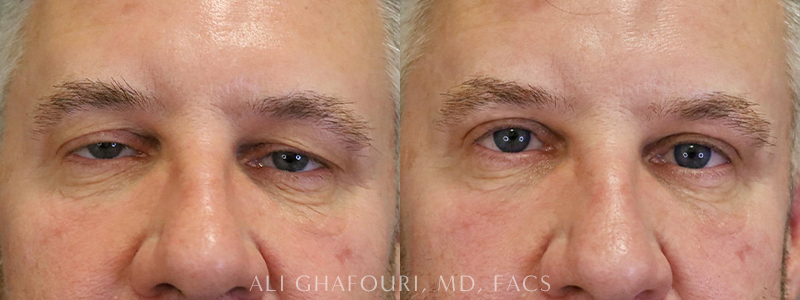
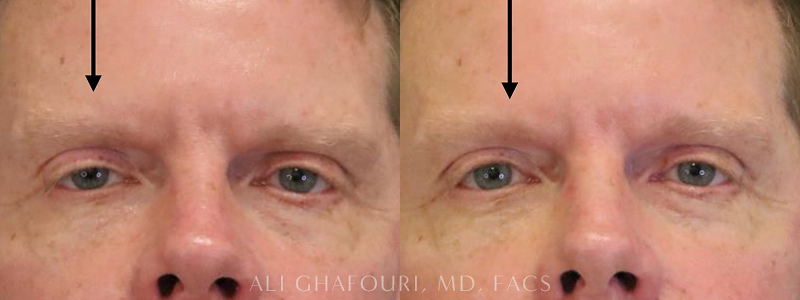
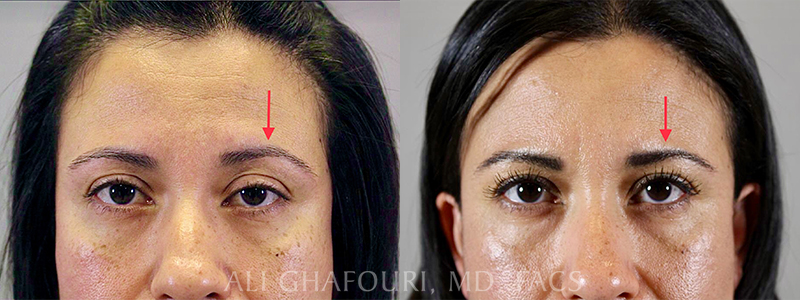
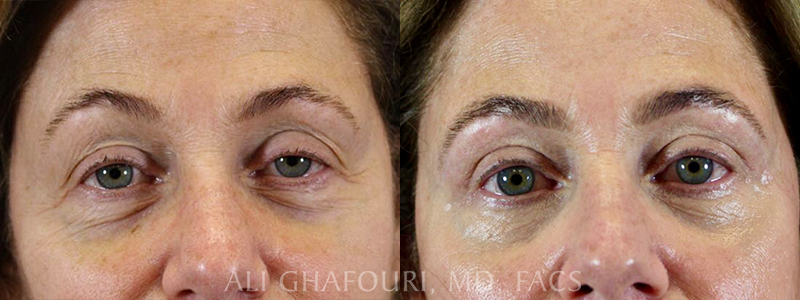
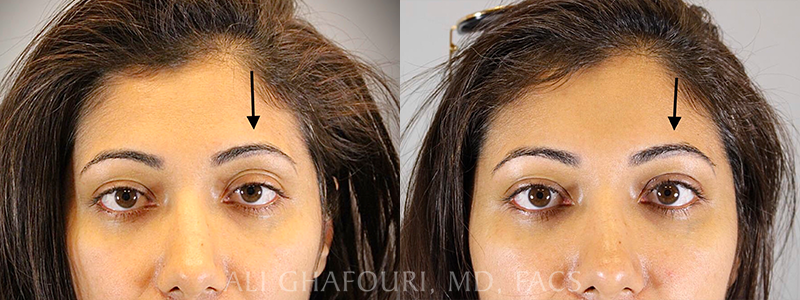
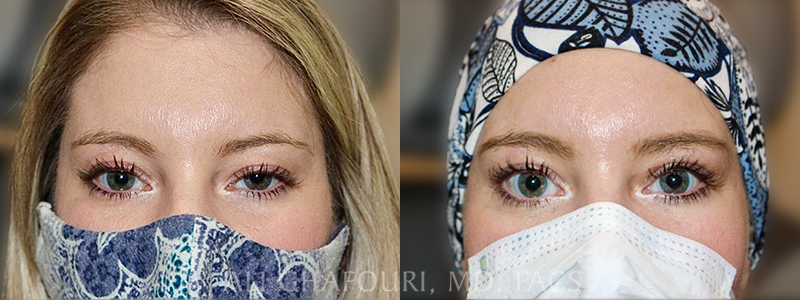
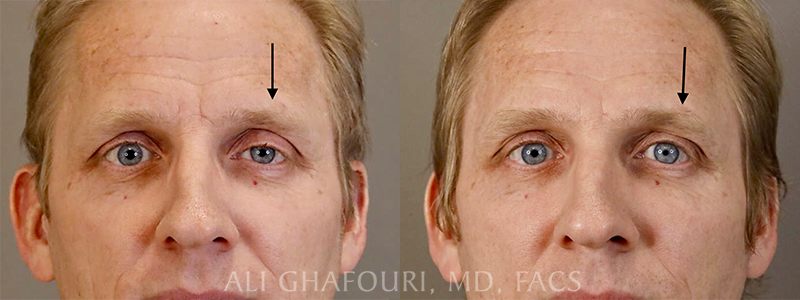
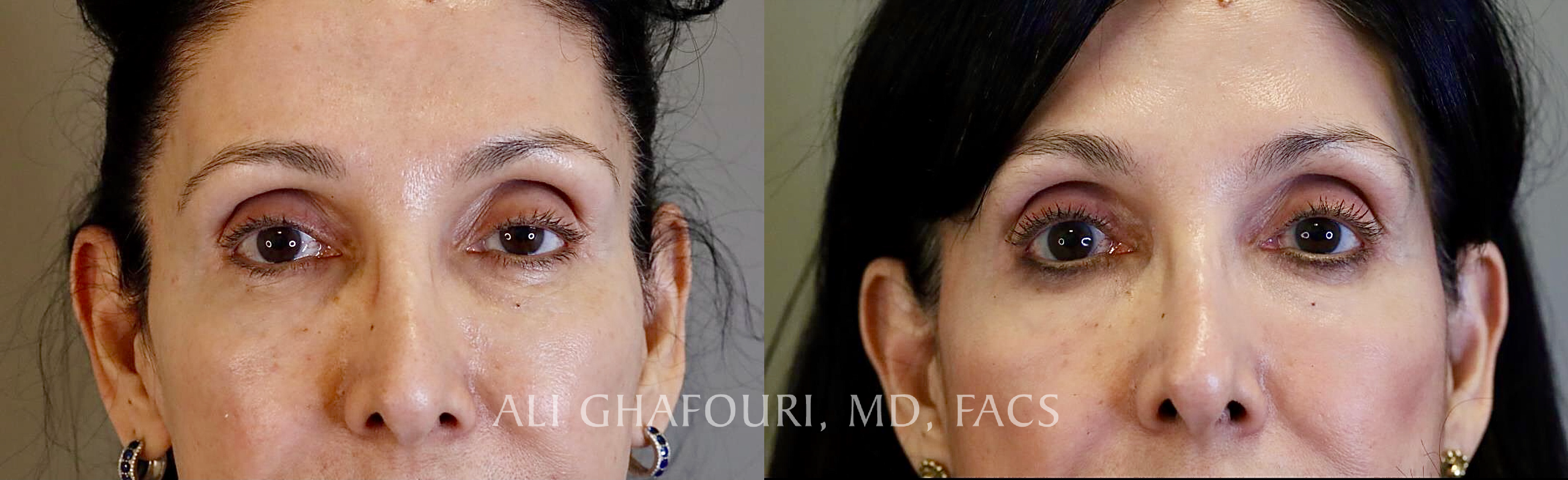
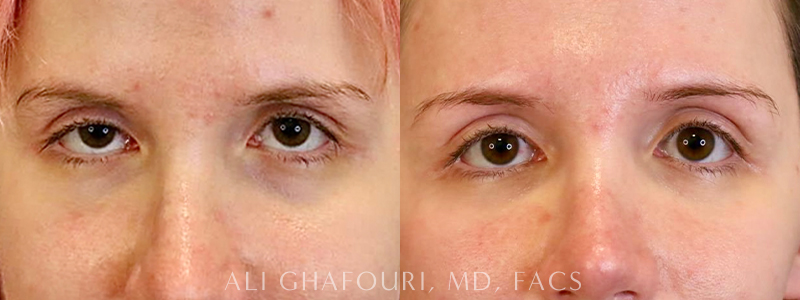
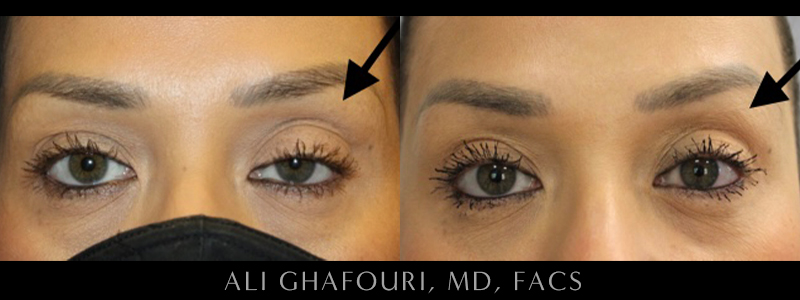
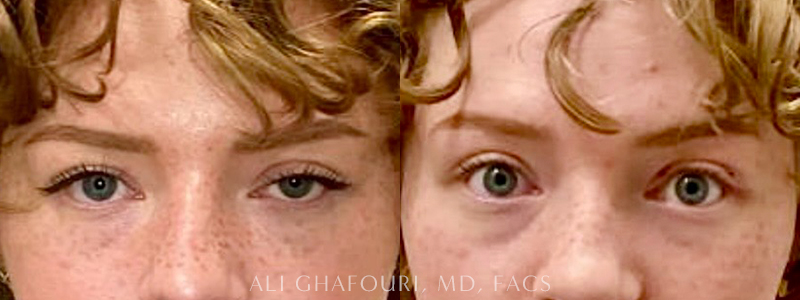
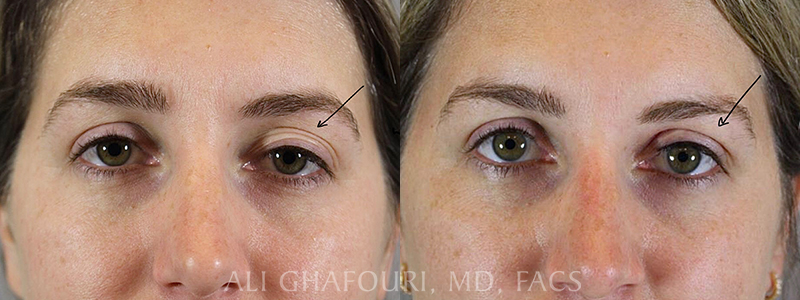
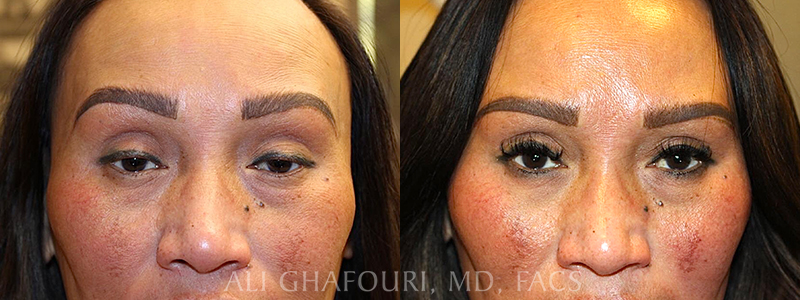
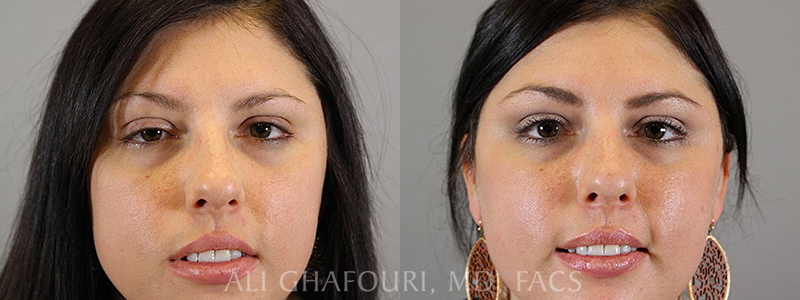
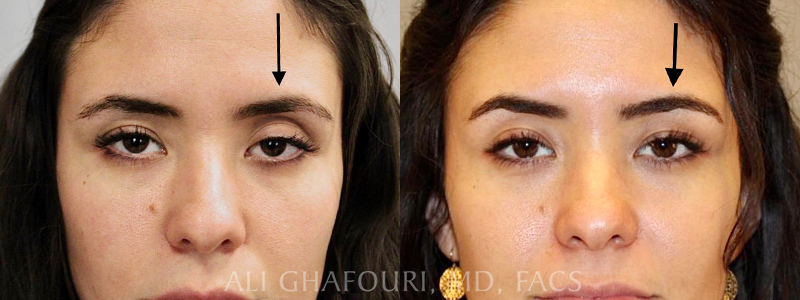
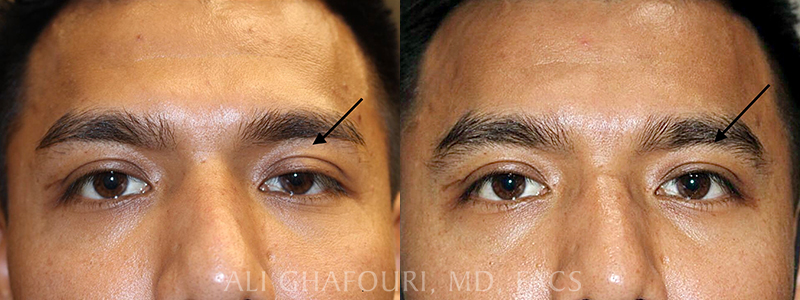
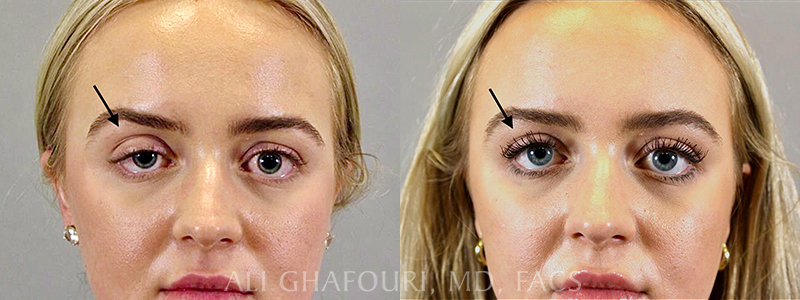
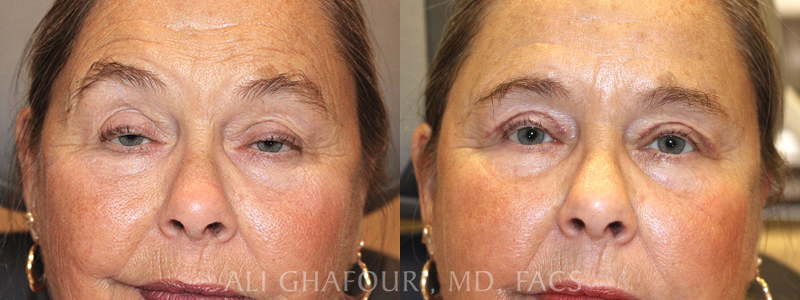
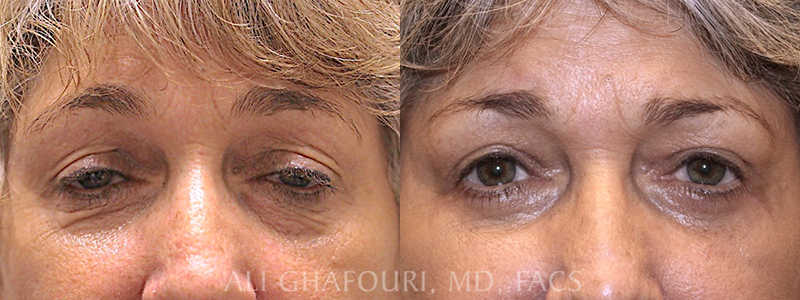
Before And After


Would You Benefit from Ptosis Repair Surgery?
PPtosis surgery can be considered for cosmetic or medical factors. Severely drooping eyelids sometimes make eyelid surgery necessary to restore a better quality of life. Candidate for ptosis repair should be in overall good health without serious eye conditions or other underlying medical problems. The following concerns can be treated during your reconstructive ptosis repair:
- Droopy eyelids from poor connective tissue that cause impaired vision
- Fatigue or headache from straining the forehead muscles
- Heavy feeling on the upper eyelids
If patients have significant amounts of sagging skin on the upper eyelid, ptosis repair can be combined with blepharoplasty (eyelid lift) for optimal results. This can be discussed at your consultation with Dr. Ghafouri, along with any other questions or concerns about how to treat ptosis.
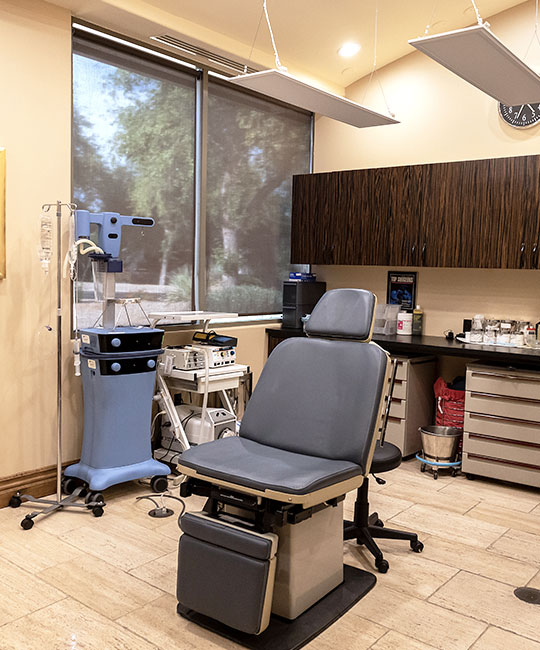
The ptosis repair procedure typically takes 30 to 60 minutes to complete, depending on the degree of ptosis and the surgical method used to correct it. Our oculoplastic surgeon, Dr. Ghafouri, will begin by making a small incision in the natural crease of the upper eyelid. From this point, he will expose the levator muscle and either trim it to shorten it (in cases where it is stretched out) or tighten it if it has weakened. If the patient has significant amounts of excess upper eyelid skin, an eyelid lift or blepharoplasty may be performed at the time to achieve better cosmetic results. In mild cases of ptosis, a different muscle (Muller’s muscle) is tightened through an internal eyelid incision. Dissolvable sutures are then used to close the incision as leave a strong levator muscle function.The Ptosis Repair Eyelid Surgery Procedure
Ptosis Surgery Recovery
Mild to moderate swelling and bruising around the eye area and temporary blurry vision are normal symptoms after ptosis surgery. Patients often take 3-5 days off work but more strenuous exercise, including bending and lifting, should be avoided for 10-14 days. Contact lenses should also be avoided for 2-3 weeks or until the incisions have fully healed. Dr. Ghafouri can prescribe pain medication and lubricating eye drops to keep you comfortable during recovery after frontalis sling fixation. He will also provide you with detailed post-operative instructions. Although future muscle weakening is possible, most patients can enjoy permanent results from this procedure.
Frequently Asked Questions About Ptosis Repair Surgery
What exactly is eyelid ptosis, and how is it different from having excess eyelid skin?
What is the difference between ptosis repair and the classic eyelid lift surgery (blepharoplasty)?
What causes upper eyelid to droop (ptosis), and how do I know if I have ptosis?
Is it possible for ptosis to affect only one eye, or does it usually affect both?
What symptoms should I look for to determine if I’m a good candidate for ptosis repair?
Why sometimes both eyes are repaired even if only one looks droopy?
Does Ptosis repair require cutting into the eyelid?
If I have both sagging skin and drooping eyelids, can both be corrected in one procedure?
Is ptosis correction surgery always predictable?
After ptosis repair surgery, is it possible for the loose skin of the upper eyelid to become more noticeable?
Where is Ptosis repair surgery performed?
How long does ptosis repair surgery usually take?
How soon can I return to work and normal activities after my ptosis repair procedure?
Will the results of ptosis repair be permanent, or could the eyelid droop again in the future?
How soon will I notice improvements in my appearance or vision after surgery?
What kind of long-term follow-up or maintenance might be needed after ptosis repair?
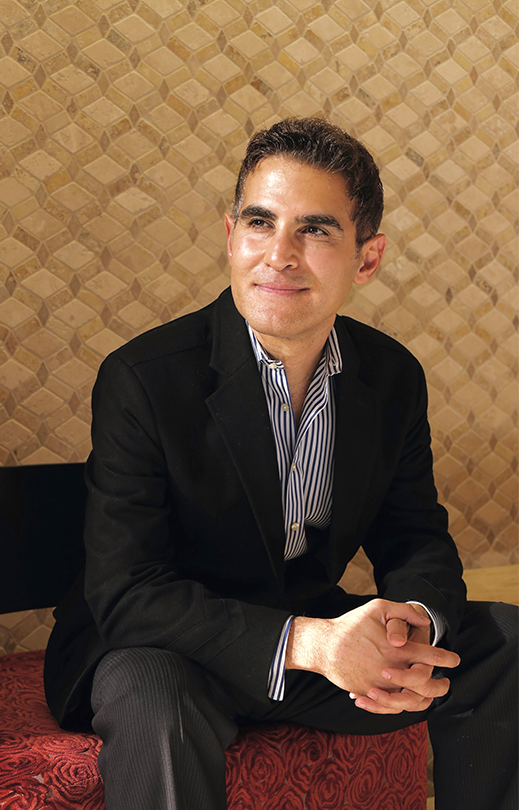
Dr. Ghafouri MD, FACS, is a board-certified ophthalmologist with specialized training in oculoplastic and orbital surgery. His exclusive specialization in cosmetic and reconstructive eyelid and facial surgery sets him apart from other plastic surgeons who practice a larger range of facial and body surgeries. The eyes are a complex and dynamic structure that requires the trained eye of an eyelid surgeon like Dr. Ghafouri to achieve the best possible results. He has performed over 12,000 aesthetic and reconstructive surgeries, each with a personalized approach and commitment to exceptional results.
Learn More


9431 E. IRONWOOD SQUARE DR., SCOTTSDALE, AZ 85258
Dr. Ghafouri offers virtual consultations for out-of-town patients. We see patients from all across the country who trust Dr. Ghafouri’s unique skills and expertise for their facial or eyelid surgeries. If you choose to travel to Arizona for your surgery, we can also recommend hotels and other resources to make your stay comfortable.
To schedule a virtual consultation with Dr. Ghafouri Click here.
Contact Us
What procedure are you interested in?

What procedure are you interested in?